Does Window Tint Block UV Rays? What to Look For in Longwood and Orlando
It's one of the most common questions people ask before scheduling a tint appointment: does window film actually block UV rays, or does it mostly just make the glass darker? The answer matters whether you're tinting a car you drive every day in Central Florida traffic or putting window film on the south-facing windows of your home in Seminole County. UV radiation in Florida isn't a mild, seasonal concern — it's a year-round threat to your skin, your car's interior, your furniture, and your flooring.
The short, direct answer is yes — quality window tint blocks UV rays, and it does so at a very high level. Premium films like the FormulaOne auto tint and Vista residential and commercial window film installed by Flying Window Tinters block more than 99% of both UVA and UVB rays. That's not a marketing approximation — it's a measurable performance spec, and it's part of why FormulaOne films are recommended by the Skin Cancer Foundation as an effective UV protection tool.
But not every film performs equally, and "window tint" as a general category covers a wide range of products — from bargain dyed films that offer minimal UV protection and fade quickly, to advanced nano-ceramic technology that delivers near-complete UV rejection regardless of how light or dark the film appears. If you're researching tinting for a car, home, or office in Longwood, Orlando, Lake Mary, Winter Park, Sanford, Oviedo, or anywhere in the Central Florida area, this guide breaks down exactly what to look for so you can make a confident, informed decision.
Why UV Protection Matters More Than People Realize
Most people think of UV rays in terms of sunburn, and while that connection is real and important, the damage UV radiation causes goes well beyond skin. In a climate like Central Florida's, where strong sunshine is essentially a year-round constant, unprotected glass allows UV rays to silently cause damage in multiple directions at once.
In vehicles, UV radiation is the primary driver of interior fading and cracking — dashboards, leather seats, door panels, and carpeting all degrade faster when regularly exposed to direct sunlight coming through untinted glass. In homes and offices, it's the same story: wood floors, upholstered furniture, artwork, and window treatments all fade more quickly under UV exposure than most homeowners realize, and the damage accumulates invisibly over years before it becomes obvious.
The skin protection angle is arguably the most important. UVA rays — the longer-wavelength UV radiation that passes through glass more readily than UVB — penetrate deeply into the skin and contribute significantly to premature aging and increased skin cancer risk. Drivers in Florida who spend time behind the wheel without UV-blocking window film are accumulating meaningful UV exposure over the course of a lifetime. This is exactly why the Skin Cancer Foundation specifically endorses high-quality automotive window film as a skin protection tool, not just a comfort upgrade.
Does Window Tint Have to Be Dark to Block UV Rays?
This is probably the biggest misconception in the window tinting industry, and it's worth addressing directly before going any further.
No — window film does not need to be dark to block UV rays. Darkness (which is measured as visible light transmission, or VLT) and UV rejection are separate performance characteristics. A film can be nearly clear and still block more than 99% of UV radiation, and a film can appear very dark and offer surprisingly poor UV protection if it's a lower-grade dye-based product.
FormulaOne's clear and light-shade film lines are a good illustration of this. Even films designed to be virtually invisible on the glass still use the same UV-blocking technology as their darker counterparts — the nano-ceramic or metalalloy construction filters UV radiation independently of how much visible light it allows through. This matters in practical terms for a few reasons:
- Drivers who want UV protection without a darker appearance have legitimate options that still perform at the same high level
- Florida's tint laws restrict how dark front side windows can be, but legal VLT limits don't prevent you from getting strong UV protection within those limits
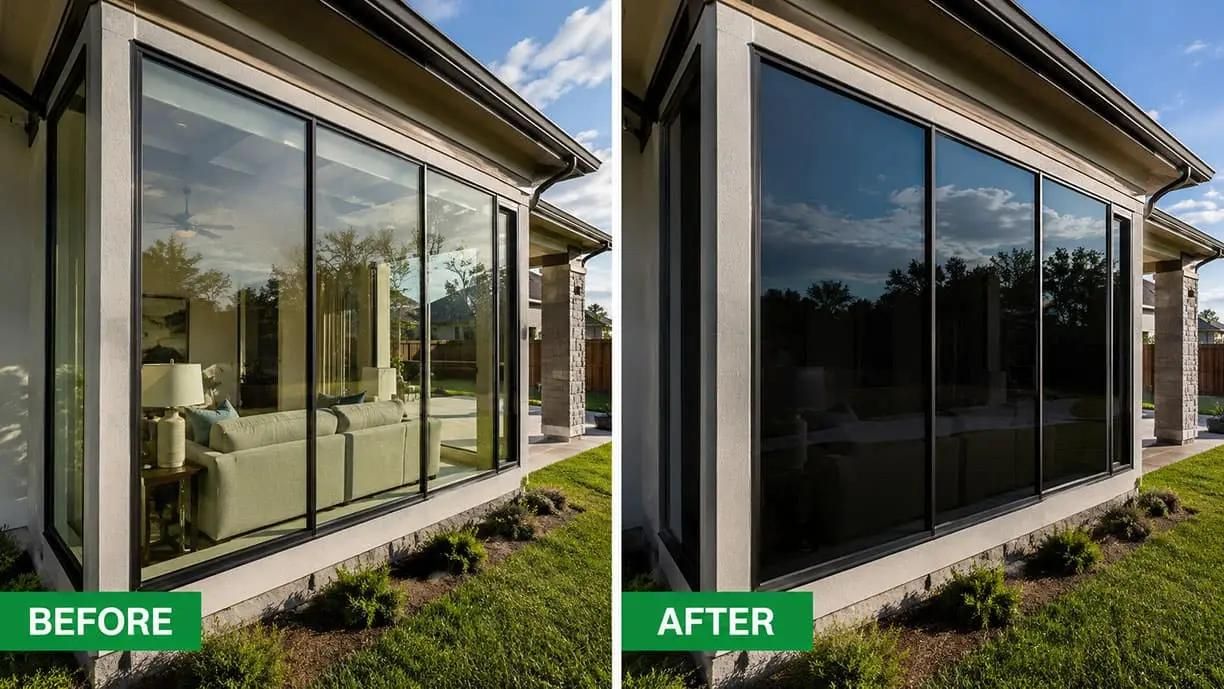
- Homeowners who want natural light in their living spaces don't have to choose between brightness and UV protection — lighter residential films can still reject UV effectively while keeping rooms bright
The key takeaway is that when you're comparing window films, VLT percentage (how dark the film is) tells you about appearance and privacy, not about UV protection. Those are two separate specifications.
How to Evaluate UV Protection When Comparing Window Films
When shopping for window tinting in Longwood or the greater Orlando area, you'll encounter a range of films at varying price points. Here's how to cut through the marketing language and actually compare UV performance across products.
UV Rejection Percentage
This is the most direct spec to look for. It tells you what percentage of UV radiation the film blocks. Premium auto films like FormulaOne and residential/commercial films like Vista block 99% or more of UV rays. If a film specification doesn't state a UV rejection percentage, or if the number is below 95%, it's a flag worth questioning.
Film Technology
The underlying technology determines how well UV protection holds up over time, which is just as important as the initial performance spec. There are three main categories:
- Dye-based films absorb some solar energy but are not engineered primarily for UV rejection. They degrade relatively quickly under Florida sun, meaning UV protection performance declines along with the film's appearance.
- Metalalloy films (metalized films) use metal particles to reflect solar energy, including UV, and generally offer stronger UV rejection than dye films. However, they can interfere with GPS, cell phone signals, and radar detectors.
- Nano-ceramic films use non-metallic ceramic nanoparticles to block UV radiation without interfering with electronics. These represent the highest-performing category for UV rejection and are the technology behind FormulaOne's top-tier series, including the Stratos, Pinnacle, and CTX lines.
| Film Type | UV Rejection Level | Performance Over Time | Signal Interference |
|---|---|---|---|
| Dye-Based | Moderate | Declines as film degrades | None |
| Metalalloy / Metalized | High | Good | Can interfere with GPS/radio |
| Nano-Ceramic (e.g., FormulaOne Stratos, CTX) | 99%+ | Excellent, color-stable | None |
| Vista Residential/Commercial (nano-ceramic) | 99%+ | Excellent, long-lasting | N/A |
Third-Party Endorsements and Certifications
One of the clearest signals of genuine UV protection performance is endorsement from an independent medical organization. FormulaOne films carry a recommendation from the Skin Cancer Foundation — a nationally recognized nonprofit that only endorses products shown to help reduce UV-related skin cancer risk. This isn't a vague association; it means the film has met measurable UV protection standards reviewed by medical professionals, not just marketing teams.
When a shop can't point to third-party endorsements or manufacturer documentation for their film's UV rejection specs, that's a meaningful gap worth pressing on before you commit.
Authorized Dealer Status
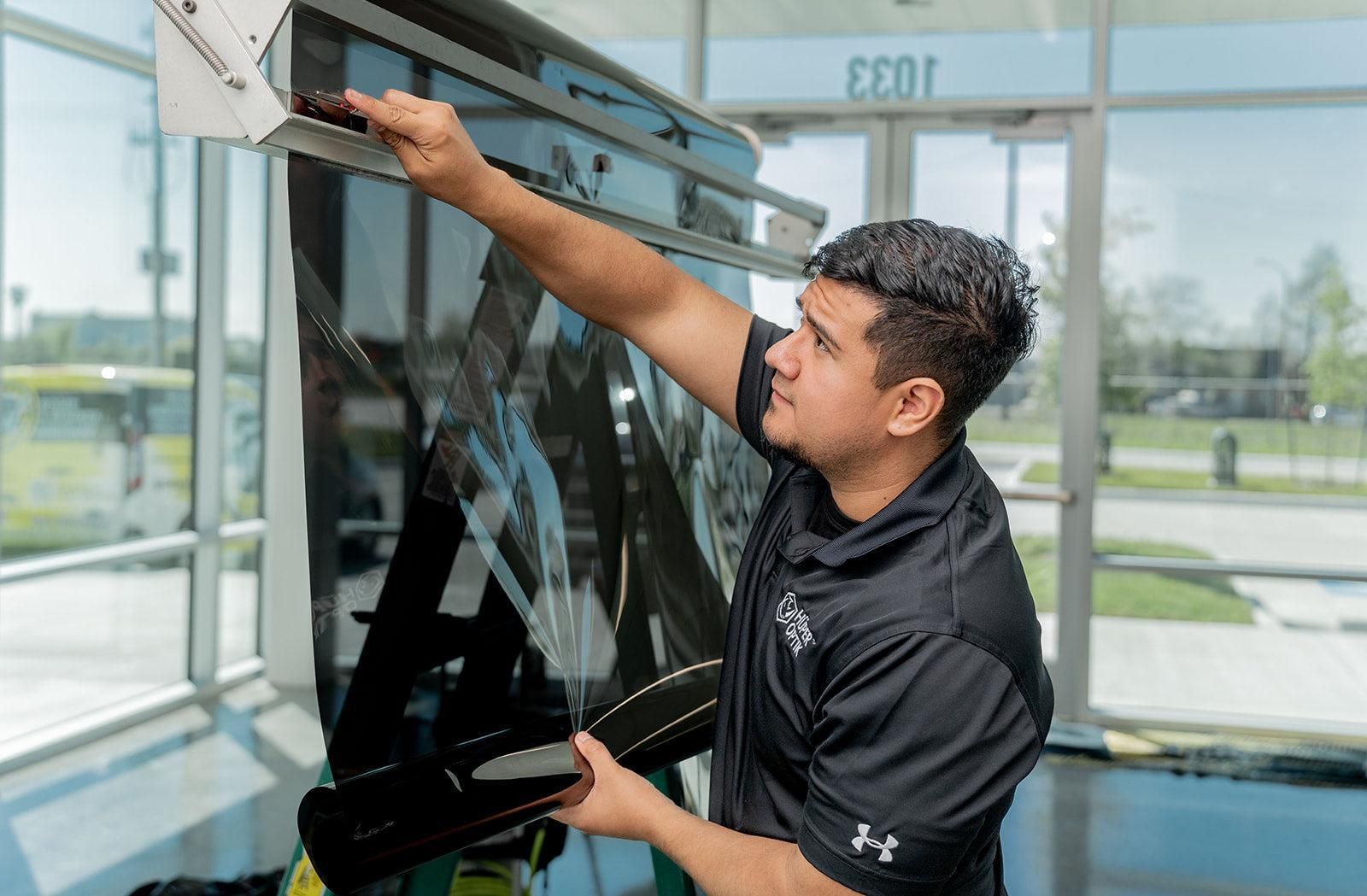
UV protection claims are only as reliable as the film being installed. Flying Window Tinters is an authorized LLumar SelectPro Dealer and the exclusive FormulaOne and Vista brand dealer for Longwood and Seminole County — a designation that's earned through demonstrated installation quality and customer experience standards, not just volume. LLumar SelectPro dealers have access to the full range of advanced FormulaOne and Vista film technology and are accountable to the manufacturer's quality standards. That chain of accountability matters because it's your assurance that the film going on your car, home, or office is the actual high-performance product being described, not a substitute.
UV Protection in Auto vs. Residential vs. Commercial Tinting
The question of UV blocking applies differently depending on what type of glass is being tinted, and it's worth understanding the distinctions.
For automotive tinting, UV protection matters for both occupant safety and interior preservation. Vehicles in Central Florida spend significant time parked in direct sun and in motion through intense midday light. FormulaOne auto films are engineered specifically for the demands of vehicle glass — blocking more than 99% of UVA and UVB rays while also providing heat rejection and glare reduction. The UV protection alone makes a measurable difference in preventing dashboard cracking, seat fading, and the kind of skin UV exposure that accumulates over years of daily commuting.
For residential tinting, UV protection targets a different set of priorities: protecting furnishings, flooring, and artwork from fading, while also creating a healthier indoor environment for occupants who spend long periods near windows. Vista residential films are designed for large glass surfaces and long-term performance — homeowners in Longwood, Lake Mary, Winter Park, and Maitland who install Vista film can expect consistent UV rejection over many years, which makes a real difference in how well floors and furniture hold their color over time.
For commercial tinting, the same UV protection benefits extend to offices, retail environments, and commercial buildings. Employees and customers near large window walls are regularly exposed to UV radiation even while indoors, and commercial film addresses that while also reducing glare that causes eye strain during screen-heavy workdays.
What the Skin Cancer Foundation Recommendation Actually Means
It's easy to see "recommended by the Skin Cancer Foundation" and treat it as a generic marketing badge. It isn't. The Skin Cancer Foundation's endorsement program requires products to demonstrate UV-blocking efficacy through testing before they qualify. For auto window film, FormulaOne's endorsement means the film has been evaluated and found to meaningfully reduce UV exposure in the driving environment — a context-specific finding, not a general wellness claim.
For Orlando and Longwood residents who spend significant time in their cars navigating Seminole County, Orange County, and surrounding Central Florida roads, this endorsement adds a layer of validated assurance that the UV protection claim behind their tint installation has medical backing, not just a manufacturer's word.
Frequently Asked Questions
Does window tint actually block UV rays, or is that just marketing?
High-quality window film genuinely blocks UV rays — up to 99% or more for premium nano-ceramic products like FormulaOne and Vista films. The UV rejection is a measurable, documented specification, not a vague claim. However, not all films perform at this level, which is why film type and brand matter when comparing options.
Does tint have to be dark to protect against UV?
No. UV rejection and visible light transmission are completely separate specifications. A nearly clear film can still block more than 99% of UV radiation. Darkness controls appearance and privacy; UV rejection is determined by the film's technology and construction.
Does residential window film block UV the same way auto tint does?
The same UV-blocking technology applies to both, though the products are engineered differently for their respective applications. Vista residential and commercial films deliver the same high-level UV rejection as FormulaOne auto tint — protecting occupants and furnishings from UV exposure just as auto film protects drivers and interiors.
What percentage of UV should good window film block?
Look for films rated at 99% or higher UV rejection. Premium products like FormulaOne and Vista film meet or exceed this threshold. Films that don't disclose their UV rejection percentage, or that fall significantly below 99%, are worth treating with skepticism.
Does UV protection from window film degrade over time?
With dye-based films, UV performance can decline as the film degrades under Florida sun. With nano-ceramic and metalalloy films from reputable manufacturers, UV protection stays consistent over the life of the film — which is one of the key reasons quality film technology matters, not just the initial performance specs.
Is window tint recommended by dermatologists or medical organizations?
FormulaOne automotive window films carry a recommendation from the Skin Cancer Foundation, a nationally recognized medical nonprofit, for their effectiveness in reducing UV-related skin cancer risk in vehicles. This endorsement is specific and verified, not a general claim.
The Bottom Line for Longwood and Central Florida Residents
Window tint absolutely blocks UV rays — but how well it does, and how long that protection holds up under a relentless Florida sun, depends entirely on the film you choose and who installs it. Premium nano-ceramic films like FormulaOne for vehicles and Vista for homes and businesses block more than 99% of UVA and UVB radiation, do so whether the film is dark or nearly clear, and maintain that performance consistently over time. Cheaper dye-based alternatives simply can't make the same claim.
Flying Window Tinters has been serving Longwood, Orlando, Lake Mary, Winter Park, Sanford, Altamonte Springs, Oviedo, Maitland, Casselberry, Windermere, and the broader Seminole and Orange County area since 1981 as Orlando's premier window tinting specialist and the exclusive LLumar SelectPro, FormulaOne, and Vista dealer for the region. If you're ready to get real UV protection for your vehicle, home, or office, call (407) 695-8468 or request a free estimate online.
Can Window Tint Interfere With ADAS Cameras and Sensors? What Longwood & Orlando Drivers Should Know